Census 2021 puts North Harrow and Rayners Lane at 2,329 households with a median age of 41.5. The inter-war stock is owner-occupier-led, which is why 83% houses and 17% flats need different handling in HA2.
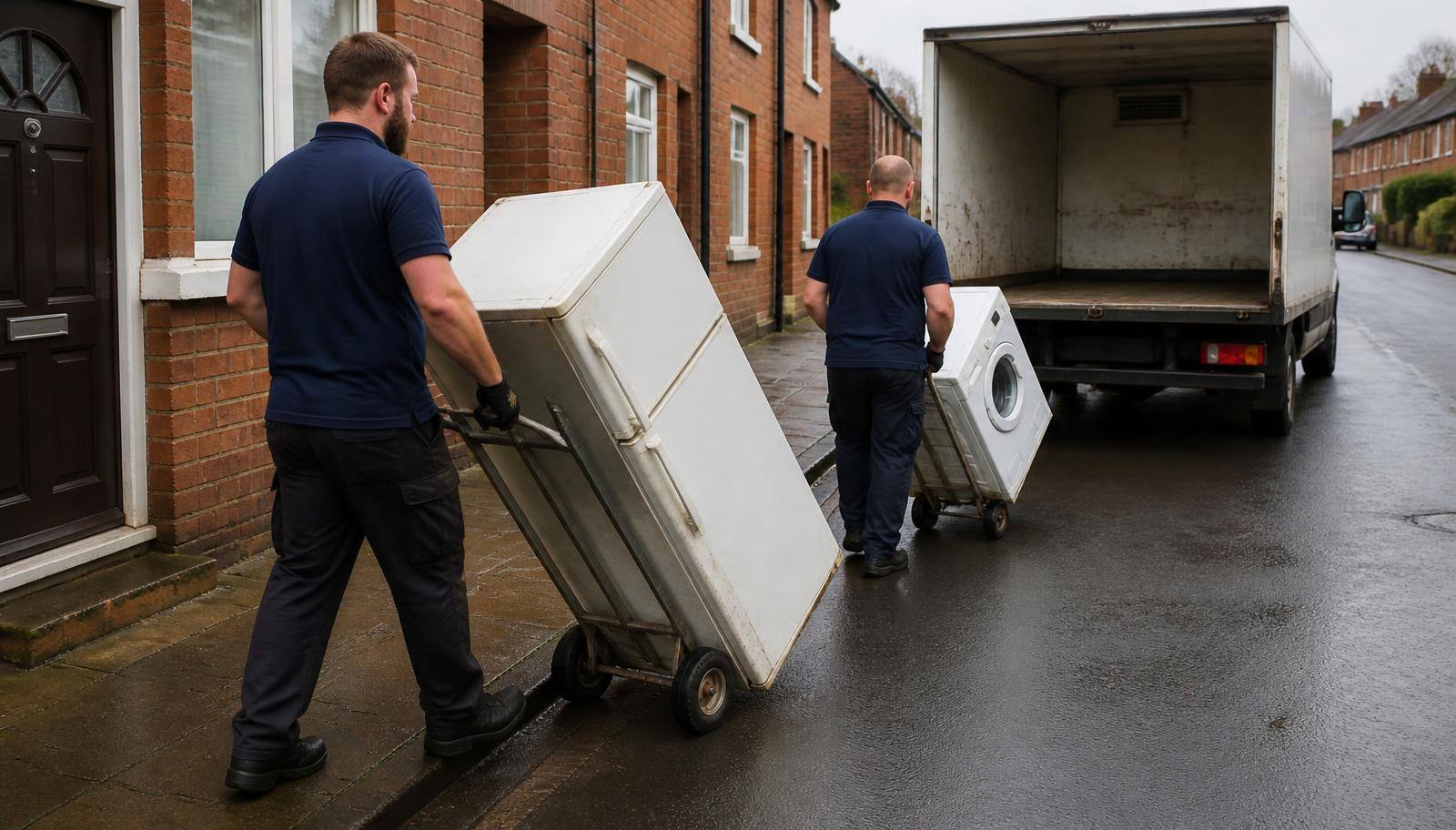
20% of households rent privately and 78% own, which is why bulky waste collection demand here peaks around tenancy changeovers and completion dates.
Walls are timber stud partitions inside in HA2, cavity brickwork outside — which is what a 17% flat share across the ONS neighbourhood covering North Harrow and Rayners Lane actually produces, so the fixing that matters in North Harrow and Rayners Lane is chosen on site — the usual failure here is in HA2, a four-hole bracket with two screws in a stud and two in fresh air — measured on the walk in from Rayners Lane (Metropolitan, Piccadilly) rather than assumed from a map.
Two streets can behave very differently in North Harrow and Rayners Lane: classic Metroland — parades of 1930s shops and endless semis behind. The quote reflects the street the job is actually on. North Harrow and Rayners Lane is outside the Congestion Charge zone but inside ULEZ; our vehicles are compliant, so nothing is added for it.
Getting to the door matters as much as the job: driveways nearly everywhere; only the parades have restricted bays. Rayners Lane (Metropolitan, Piccadilly) is the nearest station, and one or two crew depending on the item — a sofa or mattress needs two people on a London staircase regardless of how light the piece is.