
One-Off Deep Cleaning · Guide
Deep clean vs regular clean: what actually changes
The two services share a name and almost nothing else. Here is exactly what moves between them, in hours, in scope and in price.
- 7 minute read
- Updated February 2026
- Written by the Hello Services cleaning team

The short version
A regular clean maintains the surfaces you touch every day: worktops, hobs, basins, toilets, floors and a tidy. It is designed to be repeatable in two to three hours and to keep a home level week to week.
A deep clean resets everything behind and above those surfaces. It is a single visit of three to twelve hours depending on the property, and it exists to undo six to twelve months of accumulation that no weekly visit can reach.
- Regular clean: 2–3 hours, weekly or fortnightly, from £19/hour equivalent pricing
- Deep clean: 3–12 hours, once or twice a year, fixed price from £155
- Deep clean includes the oven interior, extractor filters and inside every cupboard as standard
What a deep clean adds, room by room
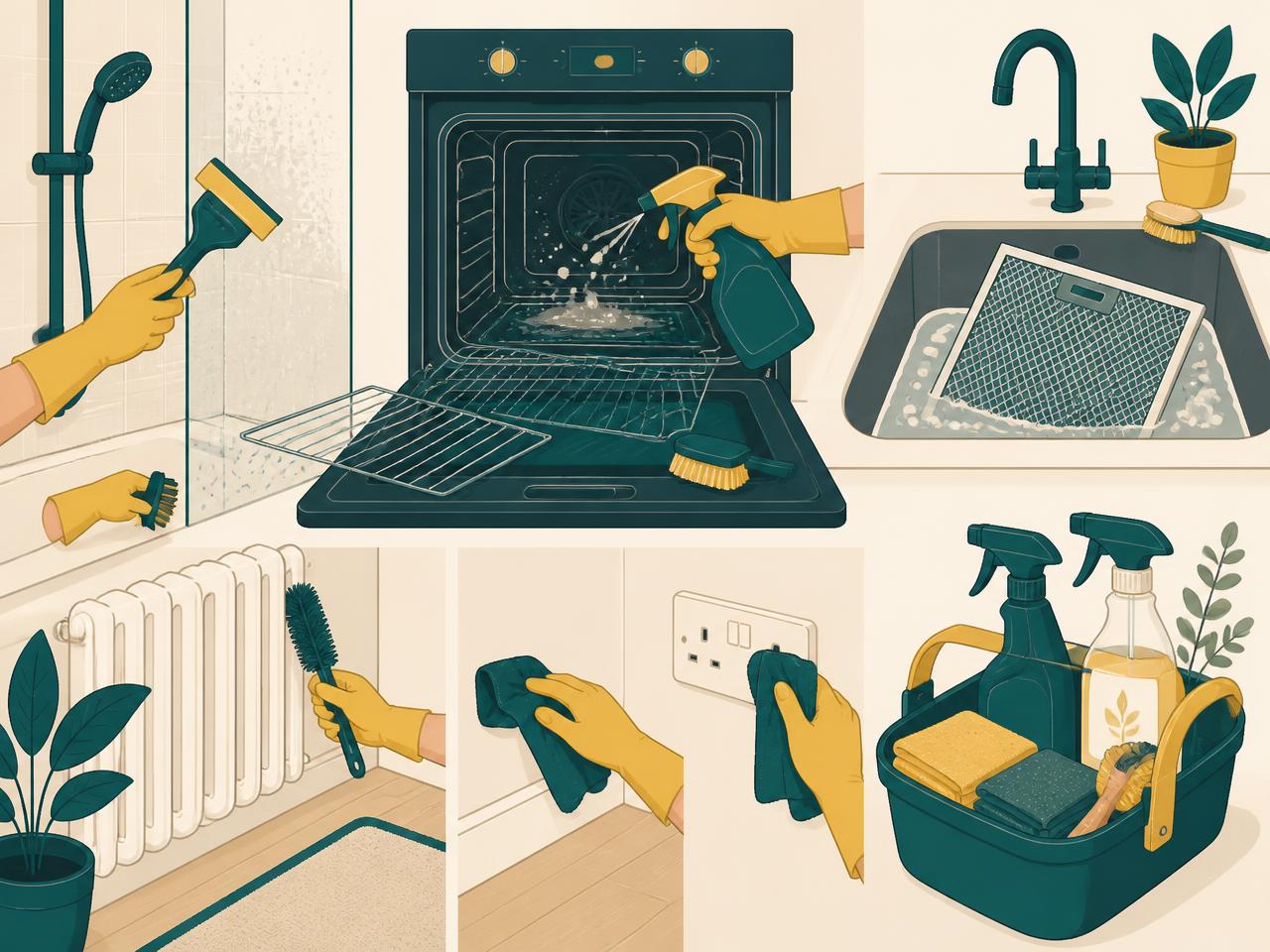
In the kitchen, the oven comes apart: racks and trays into a dip tank, door glass split and cleaned from the inside, and the extractor canopy and filters degreased. The tops of the wall units — the flattest, greasiest, least-visited surface in a London flat — are cleared and cleaned, and every cupboard and drawer interior is emptied of crumbs and wiped.
In bathrooms, the work is chemical rather than physical. Acid-safe descaler goes on screens, taps and the toilet rim and is given contact time, then grout is steamed. Scrubbing harder achieves less and scratches chrome.
In living space and bedrooms, the change is vertical and hidden: cornices, light fittings and wardrobe tops from above; skirtings, radiator backs, sockets and behind furniture from below. Floors are always last so that nothing dislodged lands on a clean floor.
How London housing changes the answer
Period conversions add high ceilings, sash boxes and original grout, all of which take time and none of which respond to pressure. New-build flats add mechanical ventilation grilles, integrated appliances behind matching doors and balcony glass. Family houses add stairs, second bathrooms and furniture that has not moved in years.
Hard water is the one constant. Every London borough is in a hard-water area, which is why limescale treatment is standard on our deep cleans rather than an add-on you have to think of.
Which one should you book?
Book a deep clean if it has been more than a year, if you have just moved in, if you are hosting something that matters, if the oven has stopped being something you look at, or if the home has changed — a new pet, a new baby, someone recovering from illness.
Book a regular clean if the home is broadly level and you want to keep it there. The usual pattern our London customers settle into is one deep clean to reset, then fortnightly regular visits to hold it, then a second deep clean before winter.
Questions
Frequently asked
Almost always. A weekly cleaner spending their first three visits catching up on a year of build-up is expensive maintenance. One deep clean resets the baseline, then a regular visit holds it.
Partly, but not the appliance work. A dip tank, steam unit and HEPA machine are team equipment, and the oven and grout passes need uninterrupted dwell time that a two-hour visit cannot give.
A one-bed deep clean is £189 to £215 — roughly three to four regular visits — and it is fixed rather than hourly, so a dirty oven costs you nothing extra in time.
Keep reading
More deep cleaning guides
- 6 min readHow much a deep clean costs in London, and what moves the pricePublished prices by size and condition, the four things that genuinely change a quote, and the charges you should refuse to pay.
- 8 min readThe deep clean checklist we actually work fromEvery room, every item, and the order it has to happen in — top down, floors last, appliances in the middle.