Professional Packing Services: The Complete UK Guide
Packing is the most time-consuming, most stressful and most damage-prone part of any move — and the part most people underestimate. This is the one-stop guide to professional packing services in the UK: what a full packing service includes, what it costs, how the pros pack a home room by room, how to protect fragile items, what movers won’t pack, and how to decide between full, part and self-pack. Whether you’re moving a flat across town or a family home across the country, here’s everything you need to pack smart.
- ✔ Full, part & fragile-only packing
- ✔ All materials supplied
- ✔ Trained, insured packers
- ✔ Nationwide UK coverage
- ✔ Optional unpacking
Packing services at a glance
The fast answers, before the full guide below.
Figures are typical UK guide prices drawn from industry surveys and removals data; your survey confirms an exact, fixed quote.
What is a professional packing service?
A professional packing service is where trained packers box up your home for you — usually a day or two before moving day — using high-quality materials and proven techniques so everything arrives safely. Rather than you spending evenings and weekends wrapping plates and hunting for boxes, a team works through the property room by room, wrapping, padding, boxing and labelling as they go. For a full pack, they typically arrive two or more days ahead of a large move; for a part or fragile-only pack, often the day before.
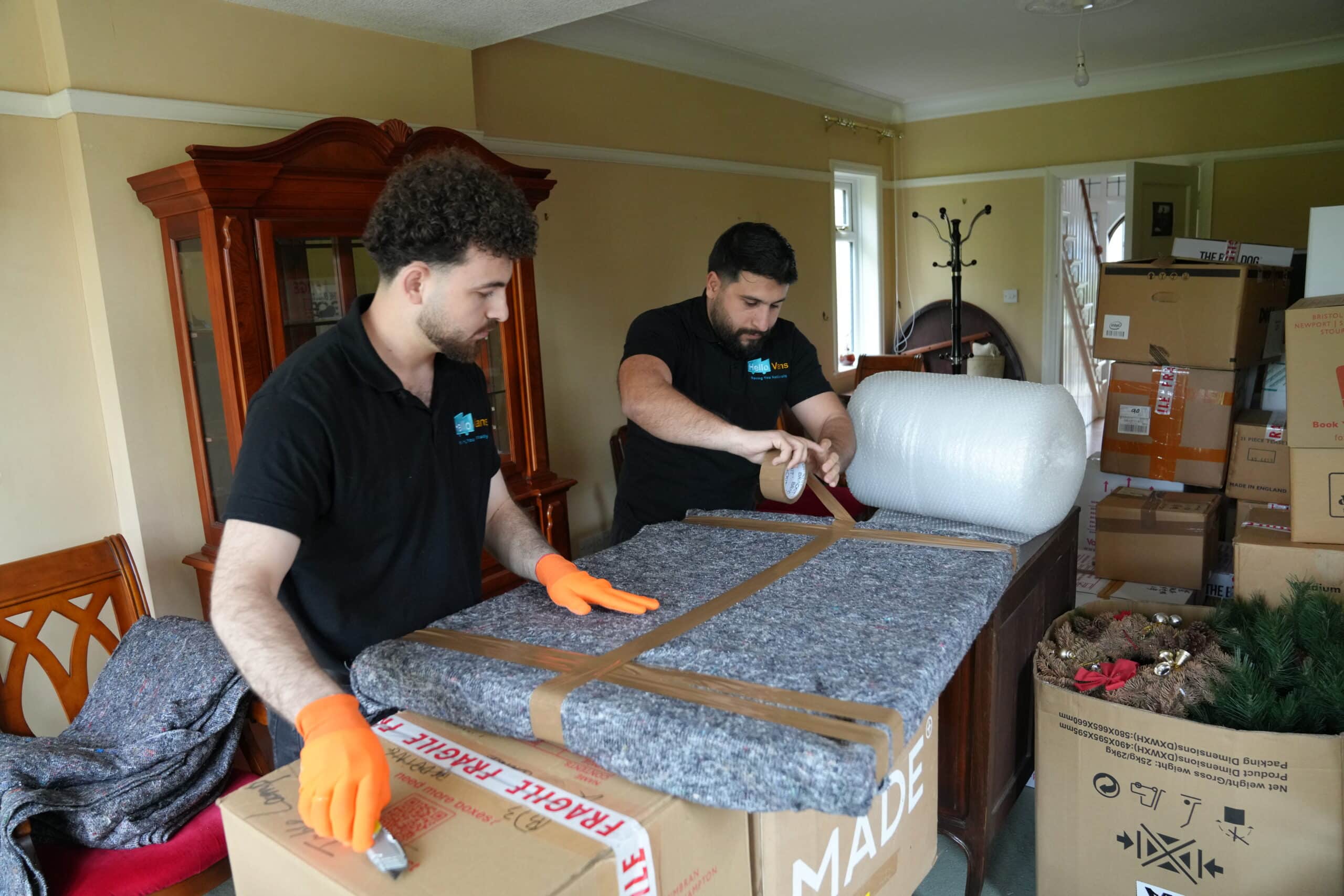
Good packers don’t just fill boxes — they protect your belongings and make the move itself faster. Neatly packed, clearly labelled boxes load quicker, stack safer in the van and unpack far more easily at the other end. It’s the difference between a chaotic move and a calm one. At Hello Services our trained teams provide full and partial packing services nationwide, handling fragile items, furniture, electronics and clothes — all carefully wrapped, boxed and labelled, with every material supplied.
Full, part or self-pack: which do you need?
The three levels of packing service — pick the one that matches your time, budget and the size of your move.
How much does a packing service cost in the UK?
Packing is an add-on to your removals, priced on the size of your home and how much there is to pack. These are typical 2026 UK guide figures.
What changes the price
- Property size — more rooms means more items, materials and packer hours
- Volume and how much you’ve decluttered before the team arrives
- Fragile, valuable or awkward items needing specialist wrapping or crating
- Full vs part vs fragile-only — you pay for what you ask them to pack
- Whether unpacking and furniture dismantling are added
- Access — stairs, no lift, long carries and tight parking add time
- Location — London moves can add congestion charge and parking-suspension costs
Guide prices only. The best way to know your figure is a free survey and a fixed, all-in quote.
What’s included — the materials the pros use
Part of what you pay for is professional-grade materials, used correctly. The core kit:
📦 Double-walled boxes
A range of sizes — small for heavy items like books, large for light, bulky bedding.
🫧 Bubble wrap & foam
For glassware, electronics and delicate decor that needs cushioning on every side.
📄 Packing paper
Acid-free paper to wrap china and fill voids so nothing shifts in transit.
👔 Wardrobe boxes
Hanging rails so clothes move straight from your wardrobe and back again, crease-free.
🛡️ Furniture pads
Blankets and padded covers to protect sofas, tables, TVs and mattresses from knocks.
🔒 Strong tape
Quality tape to reinforce box bases — the most common point of failure when packing yourself.
🏷️ Labels & markers
Every box labelled by room and contents, often colour-coded for fast unloading.
📦 Specialist crates
Bespoke crating for fine art, antiques, mirrors and other high-value, awkward pieces.
How the pros pack: a room-by-room method
Whether you book a team or tackle it yourself, this is the order and technique professionals use. Pack one room fully before starting the next — it keeps everything organised and labelled.
How to pack fragile items safely
Breakages almost always come down to two mistakes: too little cushioning, and boxes that are too big or half-empty so contents shift. The professional approach is simple and reliable. Use smaller boxes for fragile and heavy items to limit movement and stop heavier pieces crushing lighter ones. Line the base of each box with crumpled paper or foam, wrap every fragile item individually in bubble wrap or paper, and stand plates and glasses vertically on their edges rather than stacking them flat — they’re far stronger that way.
Fill every gap so nothing can move, place heavier items at the bottom and lighter ones on top, and don’t overload. The pro’s final check: gently shake the closed box — if anything shifts, add more padding before sealing. Label fragile boxes clearly on all sides, plus “this way up” where it matters. For genuinely irreplaceable or high-value pieces — fine art, antiques, mirrors — ask about bespoke crating, and remember that full transit insurance generally only applies to items the professionals have packed themselves.
Packing and insurance: what’s covered
A crucial point most movers miss — how packing affects your cover.
What packers won’t (and shouldn’t) pack
For safety, law and insurance reasons, some things never go on the van. Sort these out before packing day.
🔥 Hazardous & flammable
Petrol, gas cylinders, paint, aerosols, fireworks and corrosive chemicals — fire and safety risk.
🍎 Perishables
Fresh food, open or frozen items — they spoil, leak and attract pests in transit.
🌱 Plants
Often declined, especially long-distance; they can die, spill soil or spread pests.
💎 Valuables & documents
Jewellery, cash, passports, laptops and heirlooms — carry these yourself, not on the van.
Every company’s list differs slightly — ask for the full prohibited-items list before you start packing, and never hide restricted items in a box.
Should you pack yourself or hire a packing service?
Both are valid — it comes down to time, budget, the size of your move and how much you value your weekends.
Pack yourself
- Cheapest option — you only pay for materials
- Best for small flats and well-organised movers
- Needs time: start 2–3 weeks ahead, a room at a time
- Self-packed boxes may not be fully insured
- Higher risk of breakages without the right technique
Hire a professional
- Packs faster, safer and with better materials
- Frees your time and slashes moving stress
- Full transit insurance on professionally packed boxes
- Ideal for large homes, tight deadlines and long-distance moves
- Often saves money by preventing damage
Many movers split the difference with a part-pack: do the easy, low-value rooms yourself and let the pros handle the kitchen, fragile items and anything awkward.
Packing with Hello Services
Full or partial packing, all materials supplied, trained and insured teams — nationwide.
Tell us about your move
Share your property size, timescale and what you’d like packed for a personalised price.
We bring everything
Boxes, bubble wrap, tape and paper supplied — our trained packers handle fragile and valuable items with care.
Wrapped, boxed & labelled
Every box labelled and prepared for fast, safe loading and transport on moving day.
Optional unpacking
We can unpack at the other end and take away the empty boxes — a true door-to-door service.
Moving guides & advice
Planning a bigger move? These guides go deeper.