The Complete Guide to Appliance Cleaning: Keep Every Kitchen & Laundry Appliance Safe, Hygienic and Efficient
From the oven and fridge to the washing machine and tumble dryer, your appliances work hardest and are cleaned least. This one-stop guide explains how often to clean each one, how to do it safely, what it costs, and when it pays to call a professional.
- ★ 4.5/5 · 3,000+ reviews
- £1M insured
- DBS-checked teams
- Eco-friendly & fume-free
- 7 days a week
Why appliance cleaning matters
It’s not just about a sparkling kitchen. Regular appliance cleaning protects your health, your energy bills, the lifespan of expensive machines — and, in the case of grease and lint, your home’s safety.
The case for keeping appliances clean comes down to four things:
- Hygiene & food safety. Fridges, ovens, microwaves and dishwashers are warm, damp or food-soiled environments where bacteria thrive. The Food Standards Agency warns that harmful bugs such as Listeria, Salmonella and E. coli multiply rapidly — and Listeria can even grow inside a cold fridge.
- Efficiency & running costs. Grease-clogged oven fans, limescaled dishwashers and dust-caked fridge coils all force appliances to work harder and use more energy. A clean oven heats faster and cooks more evenly; a clean dishwasher rinses properly first time.
- Lifespan. Blocked filters, limescale and grime are among the most common causes of breakdowns. A well-maintained dishwasher can last up to 15 years; a neglected one fails far sooner.
- Fire safety. Baked-on oven grease, saturated cooker-hood filters and — above all — tumble-dryer lint are genuine fire risks. UK fire services and Electrical Safety First repeatedly link white-goods fires to a lack of basic cleaning.
How often should you clean each appliance?
A simple, realistic schedule. “Wipe as you go” prevents most build-up; the deeper jobs are quick once they’re a habit.
| Appliance | Quick clean | Deep clean |
|---|---|---|
| Oven | Wipe spills as they happen | Every 3 months |
| Hob & extractor | After each use | Filters monthly |
| Microwave | Wipe after spills | Weekly |
| Fridge | Wipe spills; check 0–5°C | Deep clean monthly |
| Freezer | Wipe seals monthly | Defrost 1–2× a year |
| Dishwasher | Rinse filter weekly | Cycle every 1–3 months |
| Washing machine | Wipe seal & drawer weekly | Maintenance wash monthly |
| Tumble dryer | Empty lint filter EVERY cycle | Vent & drum 1–2× a year |
| Kettle | Empty after use | Descale monthly |
Clean more often with hard water, pets, large households or heavy use.
Oven, hob & extractor
The oven is the appliance people dread most — and the one letting agents inspect first. Grease and burnt-on carbon don’t just smoke and smell; they reduce efficiency and are a fire risk. Wipe spills once the oven is cool, and deep clean roughly every three months (or sooner if you see smoke when baking).
A simple DIY oven method
- Remove racks and soak them in hot, soapy water (or the bath, on towels, for big trays).
- Make a paste of bicarbonate of soda and water, spread it over the interior (avoiding heating elements and the fan), and leave for a few hours or overnight.
- Wipe away the paste; spritz stubborn spots with a little white vinegar to lift residue, then rinse thoroughly.
- Clean the door glass and polish the knobs and exterior.
The hob should be wiped after every use. The extractor hood filters are widely forgotten — they fill with grease that’s both unhygienic and flammable, so degrease metal filters monthly (a hot dishwasher cycle or a soak in hot water with bicarb works well) and replace charcoal filters per the manufacturer.
Grease is fuel. A heavy build-up of grease in the oven or extractor can ignite. If you ever have a fat or oven fire, never throw water on it — turn off the heat if safe, and get everyone out.
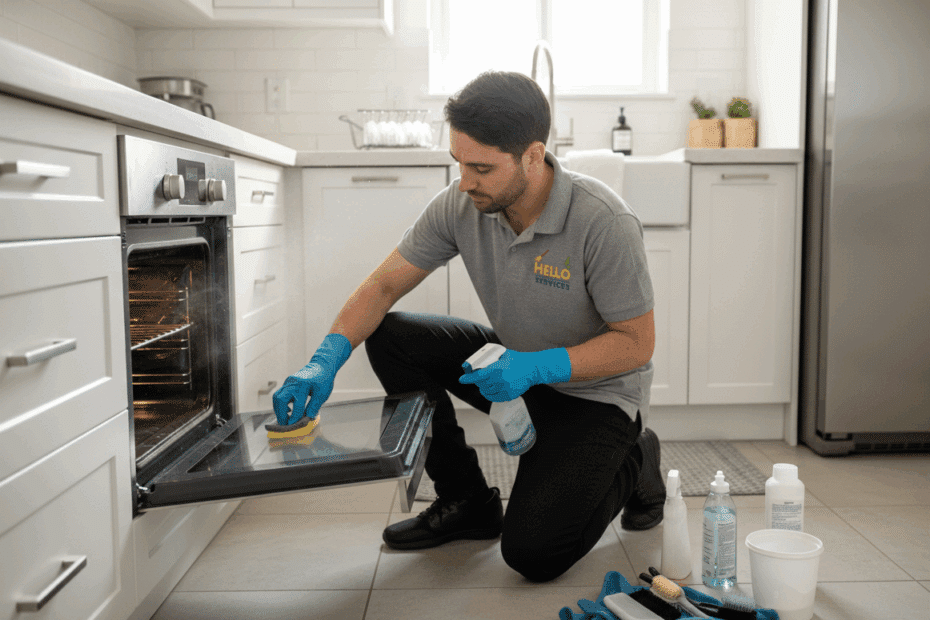
For heavily baked-on carbon, range cookers and AGAs, a professional clean is far more effective: Hello Services oven cleaning uses a non-caustic dip-tank process for racks and trays, with fume-free, eco-friendly products that leave the oven safe to use immediately.
Fridge & freezer
Your fridge is a front line for food safety. The Food Standards Agency advises keeping it between 0°C and 5°C and checking with a thermometer weekly — yet research found over half of home fridges run too warm, and most people never check. Above 5°C, bacteria multiply quickly, and Listeria grows even in the cold, which is a particular risk for pregnant women, older people and anyone with a weakened immune system.
- Wipe spills immediately, and once a month remove everything to clean shelves and drawers with warm, soapy water.
- Deodorise with a bicarbonate-of-soda solution rather than perfumed sprays.
- Clean the door seals (gaskets) so the door closes tightly and the fridge isn’t wasting energy.
- Vacuum the condenser coils at the back/underneath a couple of times a year — dust-clogged coils make the fridge work harder.
- Defrost the freezer once or twice a year; a thick layer of ice dramatically increases running costs.
Quick win: a £3 fridge thermometer and a weekly glance is the single most effective food-safety habit in any kitchen.
Dishwasher
It washes your dishes, but it still needs cleaning — and it’s often cited as the dirtiest appliance in the home, with mould and bacteria gathering in the filter and door seal. A neglected dishwasher leaves a film on glasses, smells, and eventually clogs.
- Filter: rinse it under hot water weekly to monthly — twist it out, soak, and scrub with an old toothbrush.
- Seals & spray arms: wipe the door edges and seal regularly; check the spray-arm jets for trapped food.
- Deep clean: run a hot, empty cycle with a dishwasher cleaner (or white vinegar, then a sprinkle of bicarbonate of soda) every 1–3 months to clear grease and limescale.
- Keep the salt and rinse-aid topped up, especially in hard-water areas.
Washing machine
Low-temperature washing and liquid detergent leave behind detergent residue and damp, which breed black mould and that tell-tale musty smell. Clean the machine itself about once a month:
- Run an empty maintenance wash at 60–90°C (with a washing-machine cleaner or white vinegar) to clear residue and bacteria.
- Wipe the rubber door seal and pull back its folds — this is where mould hides.
- Remove and wash the detergent drawer.
- Clean the filter (usually behind a flap at the front bottom) and leave the door and drawer ajar between washes so the drum dries.
Safety note: never run a washing machine or tumble dryer overnight or while you’re out. UK fire services advise against it, because if a fault occurs the risk to life is far higher when no one is awake to respond.
Tumble dryer — the biggest fire risk
If you read one section, make it this one. Tumble dryers account for the majority of white-goods fires in the UK — by some fire-service figures, more than half. The usual cause is simple: a build-up of lint (fluff) that restricts airflow, overheats and ignites on the heating element. Electrical Safety First has noted that only around one in twelve people clean their lint filter as often as once a year, and one in twenty never does.
- Empty the lint filter after every single cycle — it takes seconds and is the most important thing you can do.
- Keep the dryer well ventilated; make sure the vent hose is kink-free and not crushed or blocked.
- Don’t overload it, and don’t run it unattended or overnight.
- Have the internal ducting and drum cleaned professionally once or twice a year if you use it heavily.
- Register your appliances at registermyappliance.org.uk so you’re contacted about any safety recall, and fit working smoke alarms.
Warning signs: a burning smell, clothes taking longer to dry, or laundry feeling unusually hot at the end of a cycle. If you notice these, stop using the dryer and have it checked.
Microwave & small appliances
The little machines that get used daily and cleaned rarely.
Cleaning safety: the rules that matter
Never mix cleaning chemicals. Combining bleach with vinegar, ammonia or other acids releases toxic gases that can seriously harm your lungs. Use one product at a time, in a ventilated space, and rinse between products.
Power down first. Switch off and unplug appliances before cleaning, keep water away from electrical parts and controls, and never use a caustic oven spray near the fan or element. Dry everything before reconnecting.
Protect yourself and your surfaces. Wear gloves with strong degreasers, follow the product label, and test on a small area first. Caustic oven cleaners can damage seals and aluminium.
DIY vs professional — and what it costs
Routine wiping and filter-cleaning are easy to do yourself. A professional clean earns its place when grime is baked on, time is short, or the result has to meet a standard — a moving-out inventory, a property sale, or simply restoring a tired oven to showroom condition without caustic fumes in your home.
When to call a professional
- Heavy carbon and grease that ordinary cleaning won’t shift.
- Range cookers, AGAs, double ovens and built-in appliances.
- End-of-tenancy or pre-sale cleans that must pass inspection.
- When you’d rather not handle caustic chemicals or spend half a day on it.
Typical UK costs
| Service | Typical guide price |
|---|---|
| Single oven clean | from £45 |
| Double oven | ~£60–£90 |
| Range cooker / AGA | ~£90–£150 |
| Hob & extractor add-on | ~£20–£40 |
| Full appliance clean (oven, fridge, dishwasher, washer) | tailored quote |
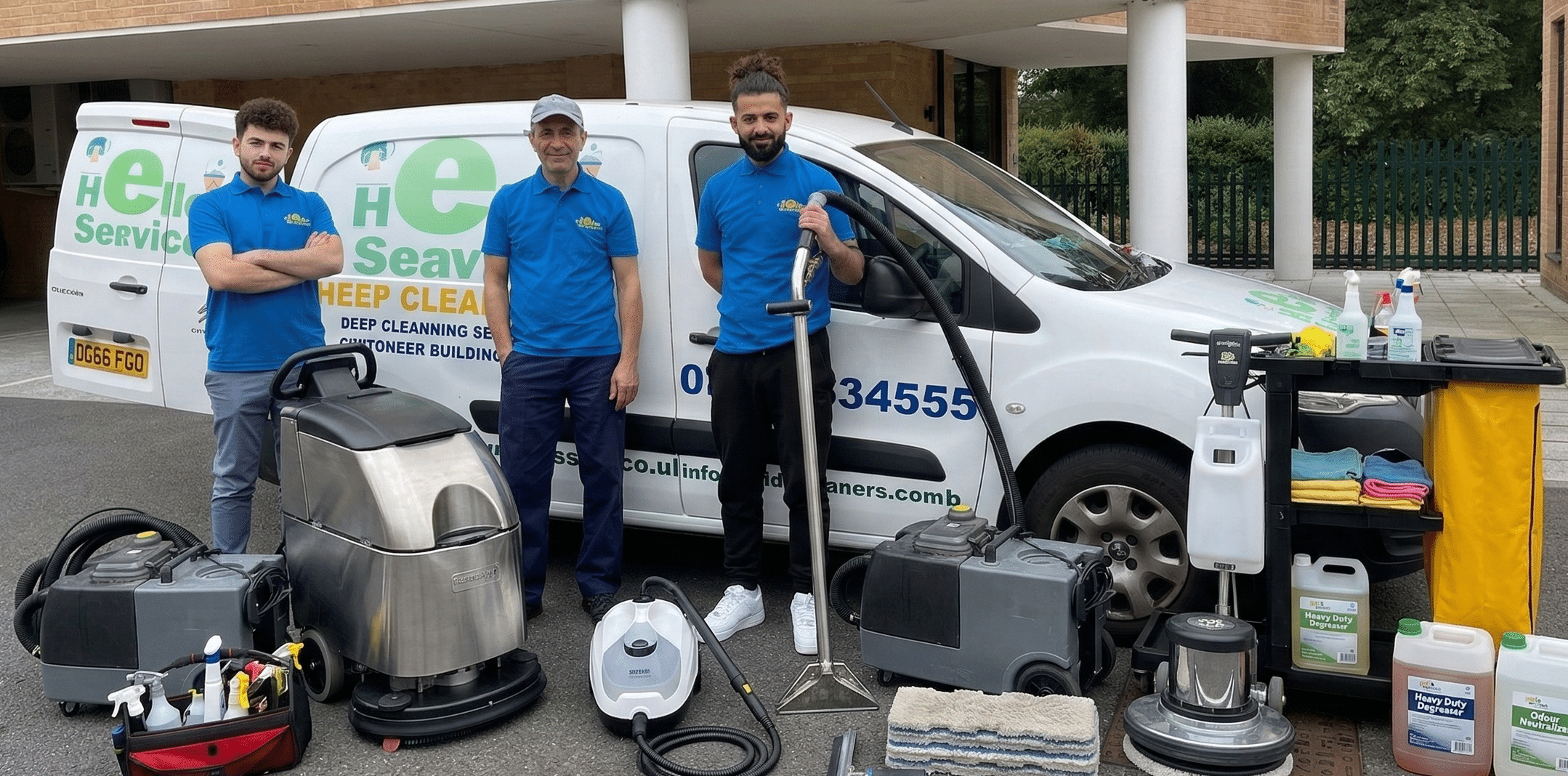
Hello Services appliance cleaning deep-cleans ovens, fridges, freezers, dishwashers, microwaves, washing machines and extractors with eco-friendly, non-toxic products. Oven cleaning starts from £45 with fixed, no-hidden-fee pricing. Request a free quote for your appliances.
Appliances & your deposit
If you’re moving out, appliances matter more than almost anything else. Cleaning is the number-one cause of tenancy deposit disputes in the UK, and the oven interior is the single most common fail at check-out — people clean the door glass but leave carbon on the back wall and racks. Fridge/freezer (defrosted and wiped), the extractor filter and the washing-machine drawer and seal are also classic inventory-check points.
A professional clean with a receipt is strong evidence at check-out. If you’re moving, it’s usually most efficient to combine appliances into a full end of tenancy clean or a one-off deep clean, and add carpet cleaning if your inventory calls for it.
Explore related Hello Services cleaning
Appliance care is one part of a spotless home. Here’s where it fits in.
Appliance cleaning FAQs
How often should I clean my oven?
Wipe spills as soon as the oven is cool, and deep clean roughly every three months — or sooner if you see smoke when baking or notice burnt-on residue. Heavy users and keen cooks may need it monthly.
What temperature should my fridge be?
The Food Standards Agency recommends 0–5°C, checked weekly with a fridge thermometer. Above 5°C, harmful bacteria multiply quickly, and Listeria can grow even at fridge temperatures.
Why does my washing machine smell?
Low-temperature washes leave detergent residue and damp that breed mould. Run a monthly empty maintenance wash at 60–90°C, clean the door seal and drawer, and leave the door ajar between washes to let the drum dry.
How do I stop my tumble dryer being a fire risk?
Empty the lint filter after every cycle, keep the vent clear and unkinked, don’t overload it, and never run it unattended or overnight. Register the appliance for recall alerts and have the ducting cleaned periodically if you use it a lot.
Is professional oven cleaning worth it?
For baked-on carbon, range cookers, or a move-out clean, yes. Professionals use a dip-tank and specialist products to restore the oven without caustic fumes, and it’s left safe to use immediately. Hello Services oven cleaning starts from £45.
Can I mix vinegar and bleach to clean faster?
No — never mix bleach with vinegar, ammonia or other acids. The combination releases toxic gases. Use one product at a time in a well-ventilated space and rinse between products.
Do you clean all kitchen appliances, not just ovens?
Yes. Hello Services appliance cleaning covers ovens, hobs, extractors, fridges, freezers, dishwashers, microwaves and washing machines, using eco-friendly products — available on its own or as part of a deep or end-of-tenancy clean.
How often should a dishwasher be cleaned?
Rinse the filter weekly to monthly, wipe the seal regularly, and run a hot empty cleaning cycle every one to three months to clear grease and limescale.
Sources & further reading
- Food Standards Agency — Chilling, freezing & defrosting food safely (fridge 0–5°C)
- Food Standards Agency — Listeria guidance
- Food Standards Scotland — Chilling & the FROST fridge study
- Electrical Safety First — White goods linked to three fires a day
- Home Office — Fire and rescue incident statistics, England (year ending March 2024)
- South Wales Fire & Rescue — Tumble dryer dos and don’ts
- Dorset & Wiltshire Fire & Rescue — Tumble dryers & washing machines
- Register My Appliance — appliance registration & recalls
- Finish UK — How to clean your dishwasher
- In The Wash — Dishwasher cleaning frequency
- Essential Food Hygiene — How often to clean appliances
Cleaning frequencies and costs are general 2026 guidance and vary by appliance, usage and water hardness; always follow your manufacturer’s instructions. Safety information is summarised from UK fire services, Electrical Safety First and the Food Standards Agency. Accurate at the time of writing (June 2026).